
Music Production For Songwriters - How To Get Started
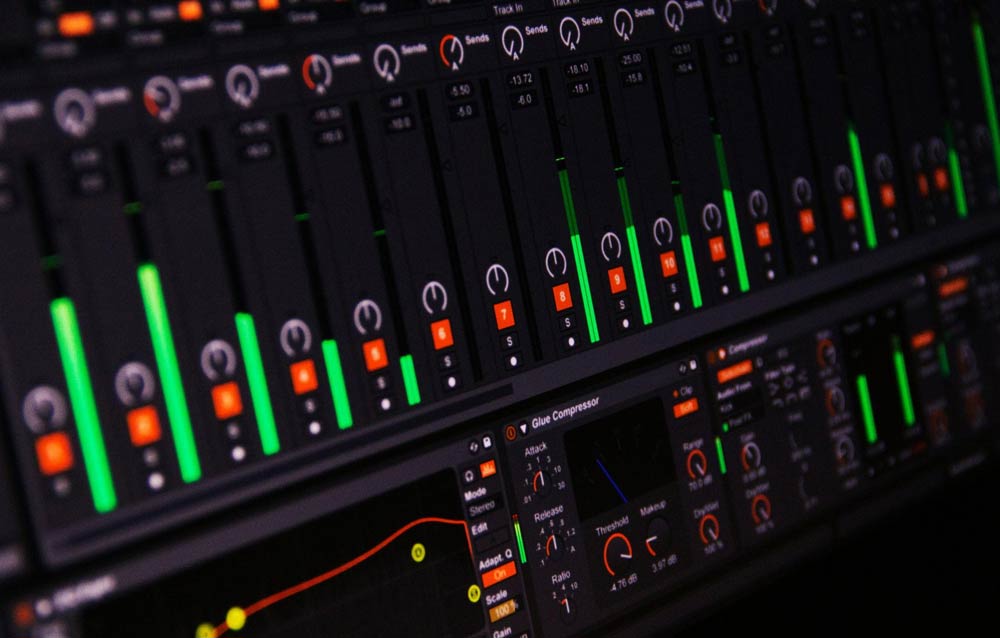
Ivan Jermakov on Unsplash
Are you a songwriter, singer or lyricist who wants to get into producing? Maybe you like electronic music and want to start writing some tracks with more of that flavour? Or you want to be able to add some atmosphere to a scratch vocal? Use it to help you with creativity, or record and polish a demo? Learning electronic music can open a lot of creative avenues, giving you deeper control over your tracks, and your creativity. But knowing where to start can seem daunting with a host of terminology, and a new list of skills to learn. This article breaks down some of the common terms, and shows you how to take your first steps into music production from a songwriting background.
Choosing a DAW
DAW stands for digital audio workstation and is in short, a music studio in your computer. A modern DAW should provide the tools to edit, record, and start making electronic music. Gone are the days of needing a huge budget to build your own studio, or hire one. You can now get nearly everything you need in one place for an affordable price.
DAWs are like first loves—you will always have a romantic attachment to your first. You can even be multi-DAWrial, able to use more than one. But I recommend picking one at the start, and taking some time to learn the basics before you start branching out and becoming multi-DAW-talented.
Do some research. See what the people that are making the style you want to make are using. Find out what your friends use, this can be a great help when you are starting out as you have someone to go to for help.
Ultimately the most popular DAW’s have all the features needed for music production, each with slightly different ways of doing things, along with some features that are unique. Pick one and get stuck in.
Your First Session in your DAW
Most DAWS have built-in learning tools to guide you through your early production sessions. Hiring a tutor, or buying a course—online or in person can also be good options to help you out, depending on how you like to learn. Or you can go in cold and work things out as you go.
There are two main ways of working in a DAW—Audio and MIDI.
Audio and MIDI
When you first open a new project you will need to choose whether you want to start working with MIDI or Audio.
Audio
In the context of DAWs audio refers to digital sound files, these can be recordings—vocals, guitar, drums etc. Or samples, made by yourself or from a sample platform.
MIDI
MIDI stands for Musical Instrument Digital Interface, put simply it is a language that allows communication between digital music technology. It can be used to control digital instruments, hardware synths, plugins, and more. If you add a synth to a MIDI channel, you tell it what notes to play, and when, with MIDI, a sampler which samples to play and when, etc.
Some people prefer working mainly in audio as it’s quick to slice up and edit audio samples, and they like to see the waveform. Whereas MIDI offers the flexibility to change notes as your song progresses, tweak settings, and more.
Samples
Samples are a main component of modern day electronic music production. Samples as they are known today are generally sounds made by producers that can be purchased from sample platforms. These sounds can be pieced together like a jigsaw puzzle to make parts of, or in some cases, entire songs. I wouldn’t use the entire song method when you are further along in your production journey. But at this stage use them a lot. Get to grips with layering them, editing, and working with them in your DAW.
Samples usually come in loops, or one-shot form. One-shots include single drum hits, synth stabs, and FX. Whilst loops could be chord progressions played by various instruments, drum loops, drum top loops, vocals, and more.
Bonus Tip: If you are a songwriter that can’t play drums you can quickly put together a drum beat to see how your track sounds with them. Record a guitar riff, and then add some pad samples underneath it, piano keys, and more.
Practice, Practice, Practice
Your first songs are almost certainly going to sound abysmal. I’m sure your guitar playing, or singing wasn’t great from the word go either though, so you can relax. It’s important at this stage to not think too much about the final product, and how it would sound to others. Throw yourself into it, and make as much music as you can. Get to grips with the interface and the main tools a DAW provides, and have fun. If you hit a roadblock, consider some more learning to help you upskill—have a lesson with a tutor or take a course, and keep practicing. As you get more fluent in the process and practice each stage your songs will start to sound better, and you can focus more on your audience, where a track fits in your set, and what to release.
FX
DAWs have a number of powerful FX that you can use to add atmosphere, space, and interest to your recordings, and make a track shine.
Reverb
Reverb is short for reverberation, and describes the reflections of sounds from surfaces, and back to our ears. Reverb FX adds simulated reverb to your recordings, samples and instruments.
This one is particularly important for singer songwriters, it can be a game-changer for previously recorded vocals, and help to create better performances by giving you more confidence when singing and recording new choruses, verses, and more.
Delay
Delay FX play duplicates of a sound back in a repetitive pattern over time. You can adjust which parts are played back, how long for, in what rhythm, and more. Delay is a powerful creative tool for bringing rhythm, atmosphere, and cohesion, and filling out a tune.
There are other popular FX such as distortion, and compression, but we will save those for a more advanced article. Play around with reverb, and delay, and get used to which parameters affect what.
If you are a songwriter or music producer looking to collaborate with fellow musicians, Verse-Chorus is a platform with 1000’s of people to connect with, including songwriters, lyricists, singers, producers, and more. Create with thousands of musicians in one place.
Written by Nick Stephens, a music production tutor, music marketing writer, and down to his DNA—music obsessive. When he isn’t making music you can find him at live music events, DJing up and down the UK, including Glastonbury, and the gym—sometimes.
More posts you might like
 Modern production tools offer a multitude of creative options, powerful features, and the ability to craft high-quality audio, all—in the box. But it can still be hard to finish songs…With almost endless options, the abi...
 A good producer can help you to find the missing piece to an idea you just can’t finish, help to give you creative direction when you get lost, and create an environment where incredible ideas can be realised.What Do Pro...
 Do you wonder how producers come up with song ideas? Maybe you are a singer, songwriter, or lyricist, and you've worked with a producer before, and now you want to know how to create the magic yourself?If you are a begin...