
Here are some terms used by musicians which you may not have heard of
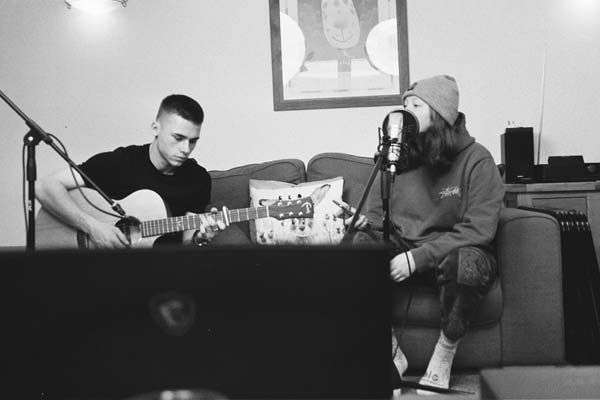
Whether you are a budding musician or simply someone who has taken a keen interest in music, you will always learn a new term. In music, every day is a learning day, and for some, getting their heads around the lingo can be the hardest part. Therefore, Verse-Chorus have decided to put together this list to help you along the way. Hopefully the below terms are words that you have been looking to learn what they mean!
Arpeggio - A technique where the notes of a chord are played in a rapid succession, rather than simultaneously.
Barre chord - A guitar chord that is played by using a finger to press down all the strings at a certain fret.
Bridge - The part of a stringed instrument that holds the strings in place on the body of the instrument.
Cadenza - A solo section in a piece of music, often featuring a virtuosic display by the soloist.
Counterpoint - The combination of two or more melodic lines in a piece of music, each with its own rhythm and contour.
Crescendo - A gradual increase in volume or intensity in a piece of music.
Damping - The technique of stopping the vibration of a stringed instrument by touching it lightly with the hand.
Glissando - A technique where a musician slides smoothly from one pitch to another, rather than playing the individual notes in between.
Harmonic - A high-pitched sound produced by lightly touching a string at a specific point while it is vibrating.
Legato - A smooth and connected style of playing, where notes are played with minimal separation between them.
Ornamentation - Decorative musical flourishes added to a melody, such as trills, mordents, and turns.
Phrasing - The way a musician divides a melody into smaller musical phrases or sections, often to convey a sense of shape or structure.
Rubato - A flexible and expressive approach to rhythm, where the tempo is temporarily slowed down or sped up for expressive purposes.
Staccato - A style of playing where notes are played in a short, detached manner.
Tremolo - A rapid repetition of a single note or series of notes.
But what does the term 'hook' in a song mean?
It is not just terms which people don't always understand in music. When it comes to songwriting, there are phrases which confuse people. Hook being one of them! Take a look below at what the hook means, and see if you can figure out why it is called the hook. It usually leaves a lot of people nodding and thinking 'now it all makes sense'.
In music, a hook is a musical or lyrical phrase that is catchy, memorable, and repetitive. The hook is usually the most memorable part of a song, and it is the part that stays with you after the song is over.
The term "hook" comes from the idea that the catchy phrase "hooks" the listener's attention and draws them into the song. The hook can be a melody, a chord progression, a riff, a lyric, or any combination of these elements.
Hooks are an important part of many different genres of music, from pop and rock to hip-hop and country. They are often used as the basis for a song's chorus or refrain, and they can help to make a song more memorable and appealing to listeners.
Ultimately, the hook is what makes a song stick in your head and what makes you want to listen to it again and again. It gets people hooked, get it now? Learn more in the Verse-Chorus blog! We hope to hear from you soon!
More posts you might like
 Maybe you are a musician looking for a lyricist to add vocals to a track? A vocalist looking for a producer to work with. Or a producer looking for a session musician? Today there are a number of options for finding some...
 Do you struggle to finish your own song ideas? Maybe you find it hard to write the lyrics for a full song, you get hung up on chord progression and arrangement, or songs just never feel ‘finished’ to you?A lot of vocalis...
- Between the Lines — a Verse-Chorus series on the songs that shaped the way we write. Dylan has said he wanted this song to feel the way a Cubist painting looks — the same story seen from several angles at once, none of ...